
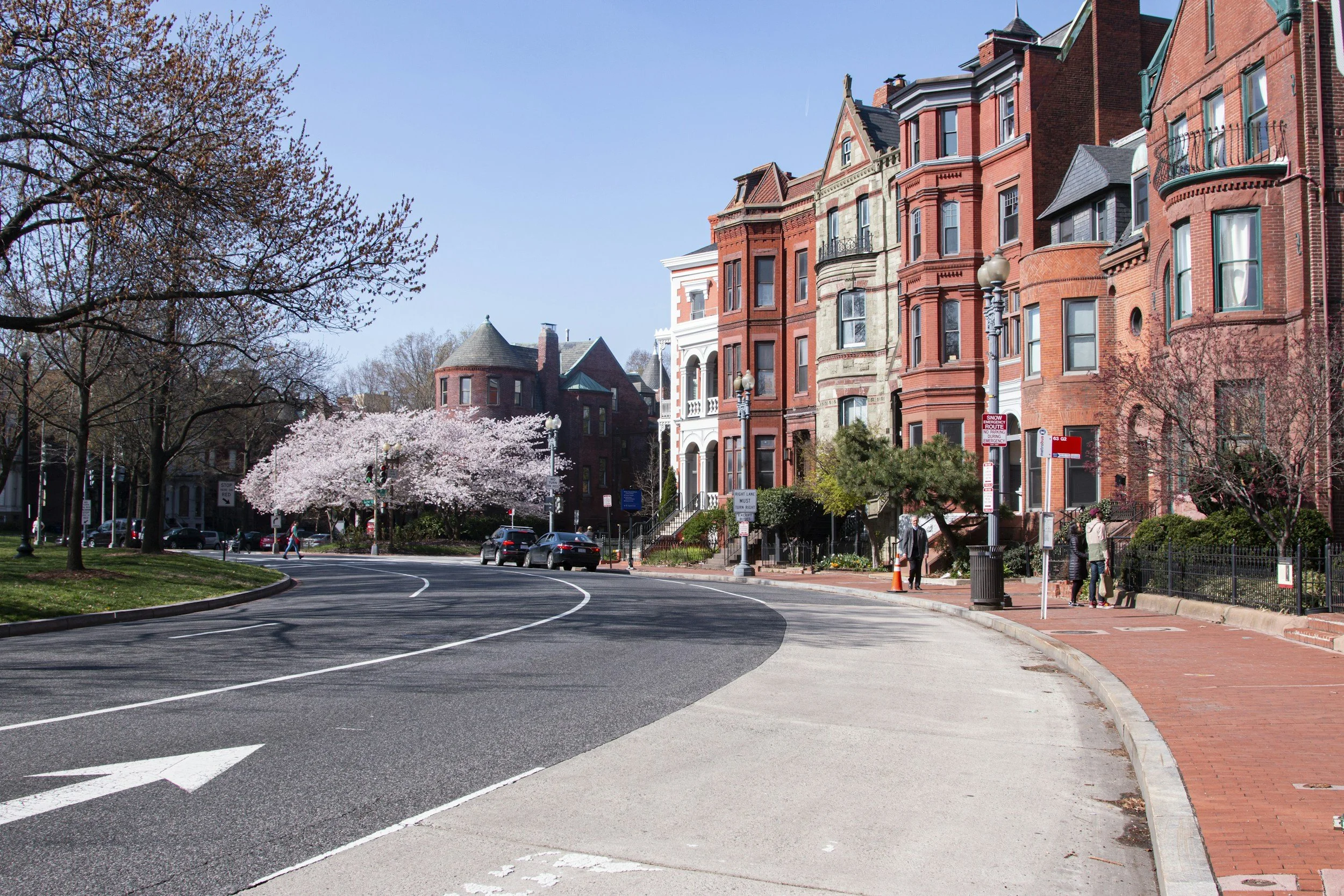
Therapist in Washington, D.C.
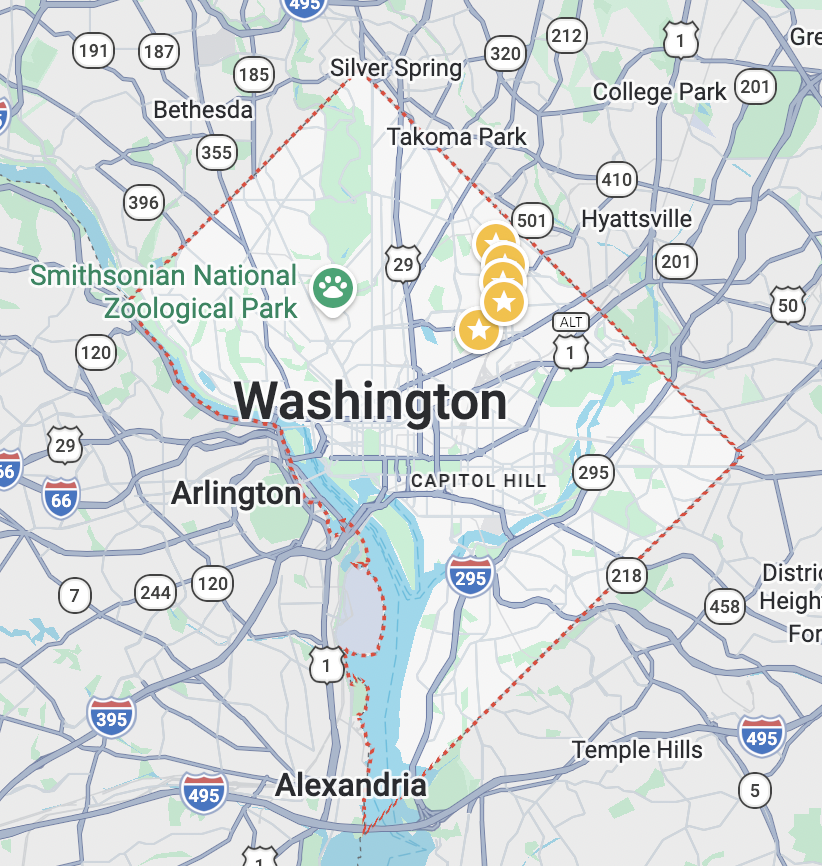
I'm a licensed therapist offering virtual sessions to clients across Washington, D.C. — Capitol Hill, Dupont Circle, Georgetown, Logan Circle, Navy Yard, and throughout the NW, NE, and SE quadrants.
My practice is built around high-functioning adults — people who are managing a great deal competently and are nonetheless stuck. In D.C. that describes a particular kind of person: attorneys, policy professionals, consultants, federal and agency staff, association and nonprofit leadership, journalists. People whose work is demanding, whose identity has quietly fused to it, and who have gotten very good at not mentioning that something is wrong.
I know this city
I'm not a Philadelphia therapist who added D.C. to a map. I lived in Washington for the better part of two decades — I arrived in 2003 for a career in finance, and from 2013 to 2020 I lived and practiced there as a therapist. The DMV isn't an abstraction to me. It's where I built a life and did much of my clinical work, and I still see D.C. clients today, some of whom I've worked with for years.
That history matters because Washington asks something particular of the people who live there. It's a city of high achievers, drawn together by ambition and often measured by proximity to power — a place where the pressure to perform rarely lets up and where a great deal of energy goes into appearing composed. It's also unusually transient: people cycle in and out with administrations, contracts, and elections, which makes it easy to feel like you're always arriving or always leaving, and hard to feel settled.
I understand that environment from the inside — the specific ambient anxiety of it, the way accomplishment and unease so often travel together here. When we work together, you won't have to explain the water you're swimming in. I already know it, and we can spend our time on you.
What brings D.C. clients to therapy
D.C. concentrates a specific set of pressures, and they show up in my consulting room in recognizable patterns:
Work that has become the whole identity. When your job is your politics, your social circle, and your sense of purpose, questioning it isn't a career decision — it's an existential one. That's a hard thing to raise with colleagues who are also your friends.
Achievement that stopped delivering. You did the things. The credential, the role, the title. The satisfaction you expected didn't arrive, or arrived and left.
Relationships strained by the pace. Long hours, travel, and a culture that rewards availability. Partners who feel like roommates. Friendships that became networking.
Anxiety running underneath. Often unnamed and long-standing, presenting as sleeplessness, irritability, an inability to stop scanning, or a low hum that only becomes visible on vacation.
Transition. Administrations change, roles disappear, contracts end. D.C. has a churn that other cities don't, and it lands on people personally.
"Matt was helpful with everything from romantic relationships to toxic work relationships to family struggles. He asked the right questions at the right moment as well as just listened when it was what was needed."
— Former Client
How I work
I take an eclectic, evidence-based approach — matching the method to the person rather than running everyone through the same protocol. Depending on what you're working on, that may include:
Cognitive Behavioral Therapy (CBT) for anxiety, rumination, and unhelpful thought patterns
Acceptance and Commitment Therapy (ACT) for values clarification and psychological flexibility
Internal Family Systems (IFS) for internal conflict and self-criticism
Emotion-Focused Therapy (EFT) for accessing what's underneath
Psychodynamic work for long-standing relational patterns
Exposure and Response Prevention (ERP) for OCD
Positive psychology for meaning, purpose, and strengths — I hold a master's in this specifically
I'm known for being direct. Clients tell me they appreciate that I'll say what I actually think rather than nodding.
What I help with
Anxiety & Stress— practical tools to quiet the noise and feel more in control
Depression & Burnout — support for low mood, fatigue, and finding your way back
Career & Identity— clarity when work feels stuck or unfulfilling
Life Transitions — steadier footing through change
Relationships — individual work on patterns that keep repeating
Men's Therapy — stress, self-doubt, and the pressure to hold it together
OCD Treatment — evidence-based care for intrusive thoughts
Sessions
All D.C. sessions are virtual, conducted over VSee, a HIPAA-compliant secure video platform. You'll need a private space and a reliable connection.
A 60-minute intake to start, then 50-minute sessions weekly or biweekly. Daytime, evening, and Saturday hours available, with evenings and Saturdays limited.
You need to be physically located in D.C. — or another jurisdiction where I'm licensed — at the time of the session.
Credentials and licensure
I'm Matt Sosnowsky, LCSW, MAPP. I hold two graduate degrees from the University of Pennsylvania — a Master of Social Work and a Master of Applied Positive Psychology — and have over 15 years of clinical experience across agency, private practice, and digital health settings.
District of Columbia license #LC50080383. Pennsylvania license #CW021603.
My work has been featured in The New York Times, Vox, SELF, VeryWell Mind, HuffPost, Oprah Daily, and Condé Nast Traveler. See media coverage.
FREQUENTLY ASKED QUESTIONS
-
My office is in Philadelphia now, and I see D.C. clients virtually. But D.C. isn't new territory for me — I lived in Washington for close to twenty years and practiced as a therapist there from 2013 to 2020. I know the city and its particular pressures firsthand, and I've continued working with D.C. clients since.
-
I'm an out-of-network provider. I don't bill insurance directly, but many clients receive partial reimbursement through out-of-network benefits, and I provide a monthly superbill for submission. My out-of-network explainer covers how to check your benefits before you commit.
-
You need to be physically located in D.C. during the session. Where you live or work on paper doesn't determine it.
-
I'm also licensed in Pennsylvania, New Jersey, Maryland, Virginia, and Washington State. If you'll be somewhere else, we'll plan around it.
-
Email, call, text or message us. From there, we'll schedule a free 30-minute video consultation. The consult is conversational — you'll have a chance to share what's going on, ask questions, and get a feel for how I work. If it seems like a good fit, we'll schedule your first full session from there.
Getting started is simple
Most people begin with a free 30-minute video consultation. It's an informal conversation — what's going on, what you're hoping for, and whether we're a good fit. No pressure.
If we move forward, the first session is a 60-minute intake. After that we typically meet for 50-minute sessions weekly or every other week.