Book Recap: Atomic Habits
Also see my Life Transitions and Positive Psychology page.
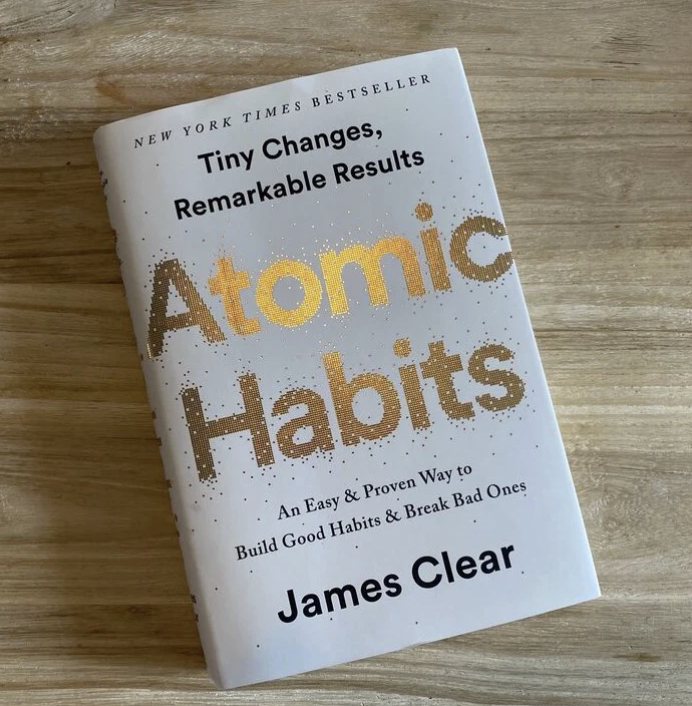
Most of us want to improve our lives in some way: feel better, do more, break free from self-sabotaging behaviors. But when it comes to lasting change, good intentions often fizzle out. Enter Atomic Habits by James Clear—a bestselling book that offers a refreshingly practical approach to habit formation, grounded in behavioral psychology.
In my Philadelphia-based therapy practice, I frequently work with high-functioning professionals who feel stuck in cycles of burnout, procrastination, perfectionism, or negative self-talk. Atomic Habits provides language and structure to understand how real, lasting change happens—not through willpower alone, but through systems and identity shifts. If you’re looking for a CBT-informed, strategy-based approach to personal growth, this book offers a toolkit worth exploring.
The Power of Tiny Changes
Clear's central idea is that small, consistent actions compound over time. You don’t need to completely overhaul your life—you just need to get 1% better each day. These "atomic habits" are small, but they carry immense momentum when sustained.
"You do not rise to the level of your goals. You fall to the level of your systems."
This perspective mirrors what we often talk about in therapy: creating sustainable change requires rethinking our daily patterns, not just setting lofty intentions. Clients are often relieved to learn that improving their routines doesn’t require dramatic, exhausting effort—but rather thoughtful experimentation and gentle persistence.
The Four Laws of Behavior Change
Clear outlines four principles that make habits easier to build and sustain. If you’re trying to implement a new behavior (like daily movement, mindfulness, or limiting social media), ask yourself whether the habit is:
Obvious – Is the cue visible and well-placed?
Attractive – Does it appeal to your values or feel rewarding?
Easy – Is it frictionless to start?
Satisfying – Is there a positive emotional payoff?
In therapy, I often help clients tweak their environment and routines to support these laws. For example:
Want to journal? Keep a notebook on your nightstand.
Want to reduce drinking? Don't keep alcohol in the house.
Want to move more? Leave your sneakers by the door.
These seemingly small changes can create powerful shifts, particularly when clients are juggling careers, families, and personal growth goals.
“You do not rise to the level of your goals. You fall to the level of your systems."
—James Clear, Atomic Habits
Identity-Based Habits
Perhaps the most transformative idea in Atomic Habits is that true behavior change stems from identity change.
"Every action you take is a vote for the type of person you wish to become."
Instead of saying, "I want to run a 5k," you start by saying, "I’m the kind of person who runs." This distinction matters. We tend to act in alignment with our identity—so by shifting how you see yourself, you're more likely to stay consistent.
This aligns with therapy around internal narratives and core beliefs. Many clients come in with limiting identities: "I'm lazy", "I'm not good at relationships", or "I'm bad with money." When we challenge those beliefs and create new narratives—grounded in experience and evidence—clients gain a sense of agency that powers forward motion.
What This Means for Clients Working Through Career, Burnout, or Life Transitions
Whether you're navigating a life or career pivot, adjusting to a new challenge, or working through perfectionism and over-functioning, habit formation is often part of the conversation.
Career & life stress: Building habits that support boundaries, focus, or work-life balance.
Perfectionism: Learning to start small, tolerate imperfection, and celebrate process over outcome.
Burnout: Reclaiming restorative practices, like sleep, movement, or downtime.
Therapy becomes a space to clarify goals, uncover roadblocks, and implement systems that support the life you want to build.
At Philadelphia Talk Therapy, I help clients break down large goals into manageable actions—drawing from CBT, positive psychology, and behavioral science. Atomic Habits often complements this work by offering clients a roadmap for action.
Together, we explore what behaviors align with your values and goals, how to navigate setbacks with self-compassion, and how to stay accountable without shame or burnout.
Curious About Building Better Habits?
You don’t have to go it alone. If you’re looking for therapy in Philadelphia or searching for a "therapist near me" to help with change, habit-building, burnout, or general life stress—I invite you to schedule a consultation.
The path to lasting growth isn’t about being perfect. It’s about showing up, consistently and curiously, for the person you’re becoming.
Matt Sosnowsky, LCSW, MSW, MAPP is the founder and director of Philadelphia Talk Therapy. For over a decade, Mr. Sosnowsky has provided psychotherapy services in agency and private practice settings, helping individuals overcome mental health challenges, manage life transitions, and find passion & meaning in life.